Safety, , 6 min read
Why does my fuse board keep tripping?
A tripping fuse board is doing its job, but it is also telling you something. Here is how to work out whether it is an appliance, an overload or a wiring fault.
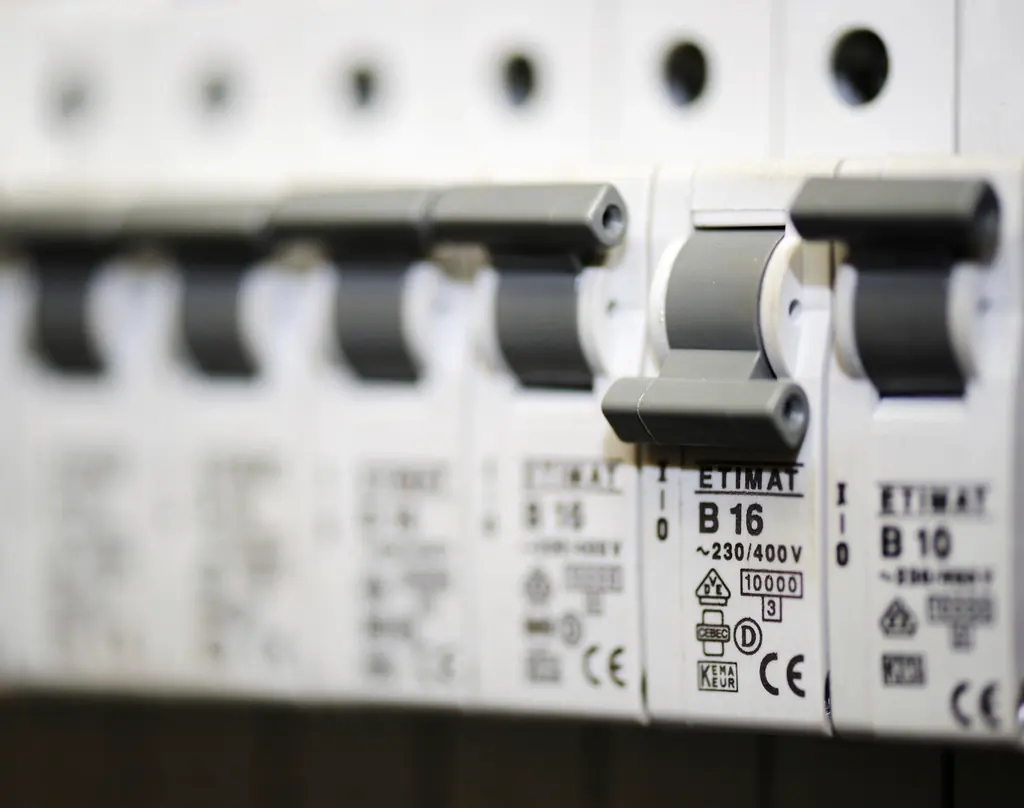
A fuse board keeps tripping because one of its protective devices is detecting a problem: usually an overloaded circuit, a faulty appliance, water getting into a fitting or a damaged cable. If the RCD keeps tripping, a faulty appliance leaking current to earth is one of the most frequent causes. If a single circuit breaker (MCB) keeps tripping, it is usually an overload or a short circuit on that circuit. You can often find a faulty appliance yourself by unplugging everything and reconnecting items one at a time. If it still trips with everything unplugged, call an electrician.
RCD or MCB: which one tripped?
Look at the row of switches on your consumer unit and find the one that has dropped to the off position. Modern boards usually have three kinds of device:
- RCD (residual current device): a wider switch with a test button marked T or Test. It usually protects a group of circuits and trips when it detects current leaking to earth. Domestic RCDs are typically rated at 30mA, the level used to protect people against electric shock. When an RCD trips, several circuits go off at once.
- MCB (miniature circuit breaker): a narrower switch for a single circuit, usually marked with a letter and number such as B6 or B32. It trips when the circuit draws more current than it is rated for, or when there is a short circuit.
- RCBO: looks like an MCB but has its own small test button. It combines both types of protection for one circuit, so only that circuit goes off when it trips.
Older boards may have rewireable or cartridge fuses instead of switches. If one of those has blown, leave it to an electrician. Boards of that age often have no RCD protection at all.
When a circuit breaker keeps tripping
An MCB that trips when you switch on a particular appliance, or at busy times of day, is usually telling you the circuit is overloaded. Typical examples are a kitchen circuit running a kettle, microwave, toaster and washing machine at the same time, or a socket circuit feeding portable heaters in winter. Try spreading the load across different circuits. If it keeps happening in normal use, the circuit may need splitting or an extra circuit adding, and you can get a guide price for that from our instant quote tool.
An MCB that trips instantly, sometimes with a bang or a flash, points to a short circuit. That might be a failed appliance or bulb (lighting circuits often trip when an old filament or halogen lamp blows), or it might be a damaged cable. If it trips again as soon as you reset it with nothing connected, leave it off and call an electrician.
When the RCD keeps tripping
Because an RCD looks for tiny amounts of current leaking to earth, it reacts to faults that would not trouble a circuit breaker. The usual causes are:
- Faulty appliances. Kettles, washing machines, dishwashers, tumble dryers, fridge freezers and toasters are common culprits. Heating elements in ovens and immersion heaters can absorb moisture and trip the RCD, especially after a period without use.
- Water ingress. Outside lights, garden sockets and fittings below a leaking bath or shower. If the RCD trips after heavy rain, look at anything outside first.
- Damaged cables. A nail or screw through a cable when hanging pictures or fitting shelves, cables disturbed during building work, or rodents chewing wiring in a loft or under floors.
- Cumulative earth leakage. A frequent cause of seemingly random tripping on older boards, explained further down.
How to find a faulty appliance
This is the one piece of fault finding that is safe to do yourself, because it only involves plugs and switches you use every day.
- Switch off and unplug everything on the affected circuits. Where an appliance is wired into a switched fused connection unit (a wall switch with a small fuse in it), switch that off too.
- Reset the RCD by pushing its switch firmly back up. If it trips again even with everything unplugged, the fault is not in a plug-in appliance, so go to the paragraph below this list.
- If it stays up, plug in and switch on one appliance at a time, waiting a minute or two between each.
- When the RCD trips, the last item you connected is the likely cause. Leave it unplugged and have it repaired or replaced.
- Some faults only appear at a certain stage, such as a washing machine heating water. If you cannot pin it down, note what was running each time it tripped.
If the RCD trips with everything unplugged, switch all the MCBs off, reset the RCD, then switch the MCBs back on one at a time. The circuit that trips the RCD is the one with the fault. Leave that circuit off and tell the electrician which one it was, as it saves time when they arrive.
Nuisance tripping on older boards
Many homes still have a split-load consumer unit, where one or two RCDs each protect a large group of circuits. Appliances with electronics or mains filters leak a very small amount of current to earth in normal use. Computers, televisions, chargers, LED drivers and washing machines all contribute. Each one on its own is harmless, but when the leakage from everything on one RCD is added together, it can sit close to the point where the RCD trips. A small extra spike, such as a fridge compressor starting or a slightly damp kettle element, is then enough to take out a whole side of the board.
BS 7671, the IET Wiring Regulations, expects installations to be arranged so that normal leakage does not cause unwanted tripping. On a modern board the usual answer is to give each circuit its own RCBO, so one problem only affects one circuit. A fuse board upgrade also brings a non-combustible metal enclosure, which has been required for domestic consumer units since 2016. Replacing a consumer unit is notifiable under Part P of the Building Regulations, so it must be done by a registered electrician who can certify the work. If you are also planning an EV charger, read our guide to fuse board upgrades for EV chargers first.
When to call an electrician
- The RCD or a breaker trips again with everything unplugged
- It trips several times a week and you cannot link it to one appliance
- You notice a burning smell, scorch marks, buzzing or heat at the consumer unit, a socket or a switch
- The tripping started after water got into the property, or after building or decorating work
- Your board has old rewireable fuses, or no RCD protection at all
- Tripping has become more frequent as you have added appliances, an extension, a heat pump or an EV charger
We use test equipment to measure the insulation resistance of each circuit, which finds faults that cannot be seen, rather than replacing parts on guesswork. If you notice a burning smell alongside the tripping, treat it as urgent and read our guide to a burning smell from a plug socket.
If your fuse box keeps tripping and you cannot get the power to stay on, or there is any sign of burning or heat, call 07973 781349.
Written by A Walsh ElectricalNAPIT-approved electricians based in Buckhurst Hill, looking after homes and businesses since 1999.